
01
Industrial process robotics
An industrial robot performs every operation with the same precision in every cycle — three shifts, no breaks. Robotics stabilizes product quality, reduces defects and increases output in the same floor space. The robot takes over heavy, hazardous and monotonous operations, while employees move on to work that needs their experience and skills: control, setup and quality assurance.
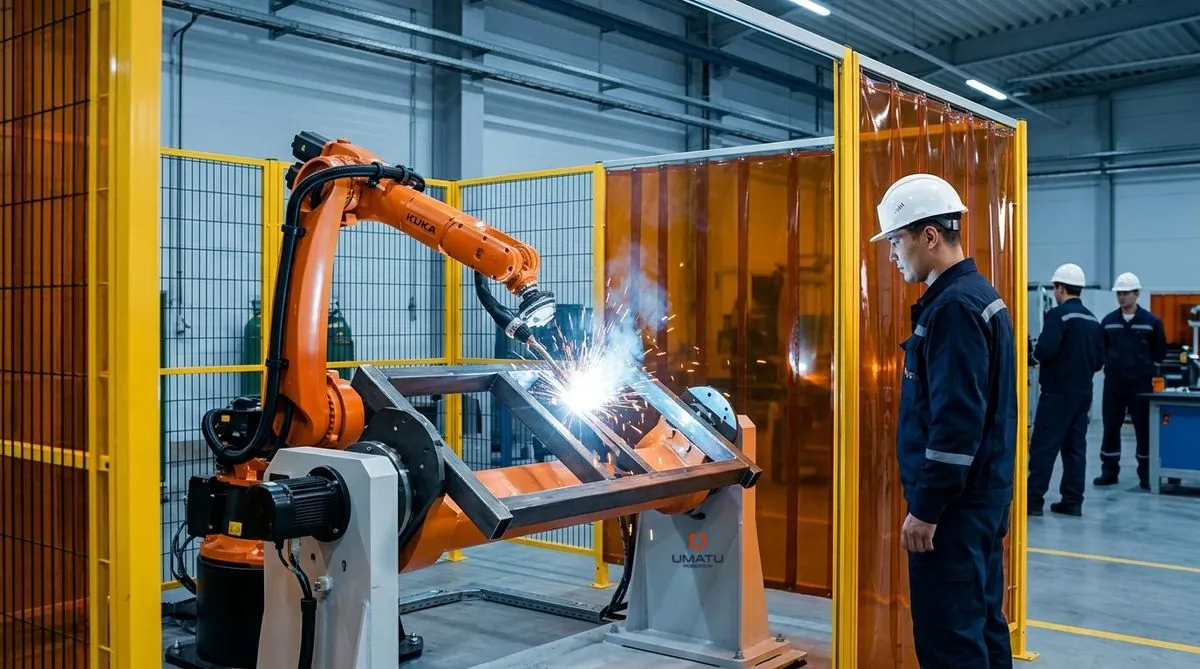
Welding
What it is
MIG/MAG and TIG arc welding, resistance spot welding. Steel structures, frames, brackets, pipe assemblies, parts for agricultural and mining machinery. The robot guides the torch by program, while the positioner rotates the part so that every seam is welded in the optimal position.
Why robotize
Skilled welders are scarce, and the quality of a manual weld depends on the person and their fatigue at the end of the shift. The robot repeats the weld parameters across the whole batch, works two or three shifts and takes people out of the smoke and radiation zone. The welder becomes the cell operator and supervises several stations.
What's includedKUKA welding robotPositionerWelding power sourceSeam finding and trackingTorch cleaning stationFume extraction
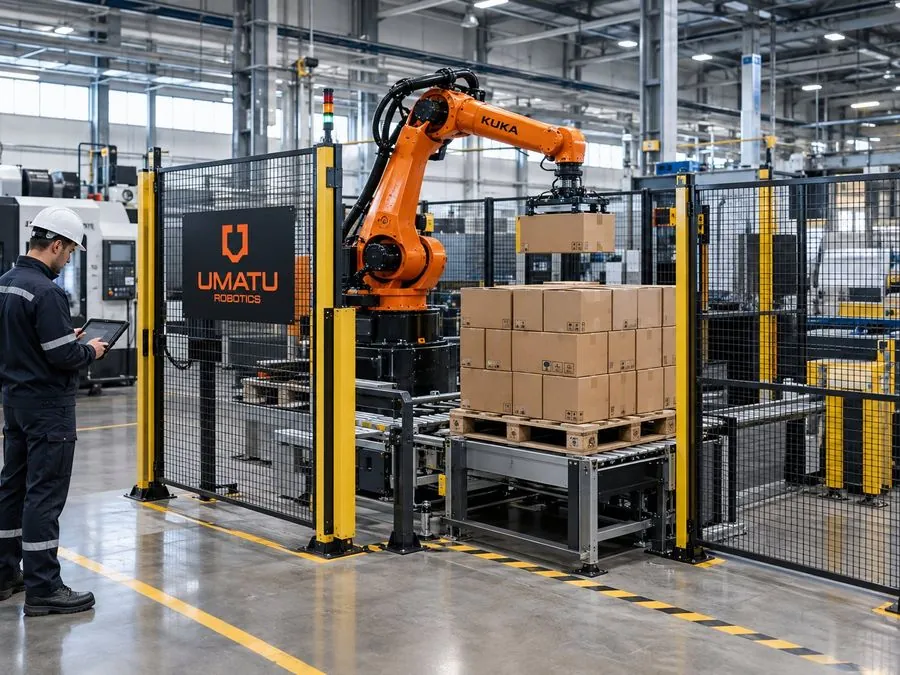
Palletizing and depalletizing
What it is
Stacking products onto pallets in a set pattern at the end of the line, and unloading incoming pallets at the inlet. Bags, boxes, bottles and crates, common and facing bricks, aerated concrete blocks, paving tiles, boxed porcelain tiles and large-format slabs.
Why robotize
Lifting 25–50 kg bags, bricks and slabs by hand means back injuries, broken products and constant staff turnover. The robot builds an even, stable pallet at line speed and handles fragile slabs with care. A new stacking pattern is set in the program without modifying the equipment, and during depalletizing a camera locates every item on the pallet.
What's includedKUKA palletizing robotGripper: fork, clamp or vacuumMachine visionConveyorsFencing
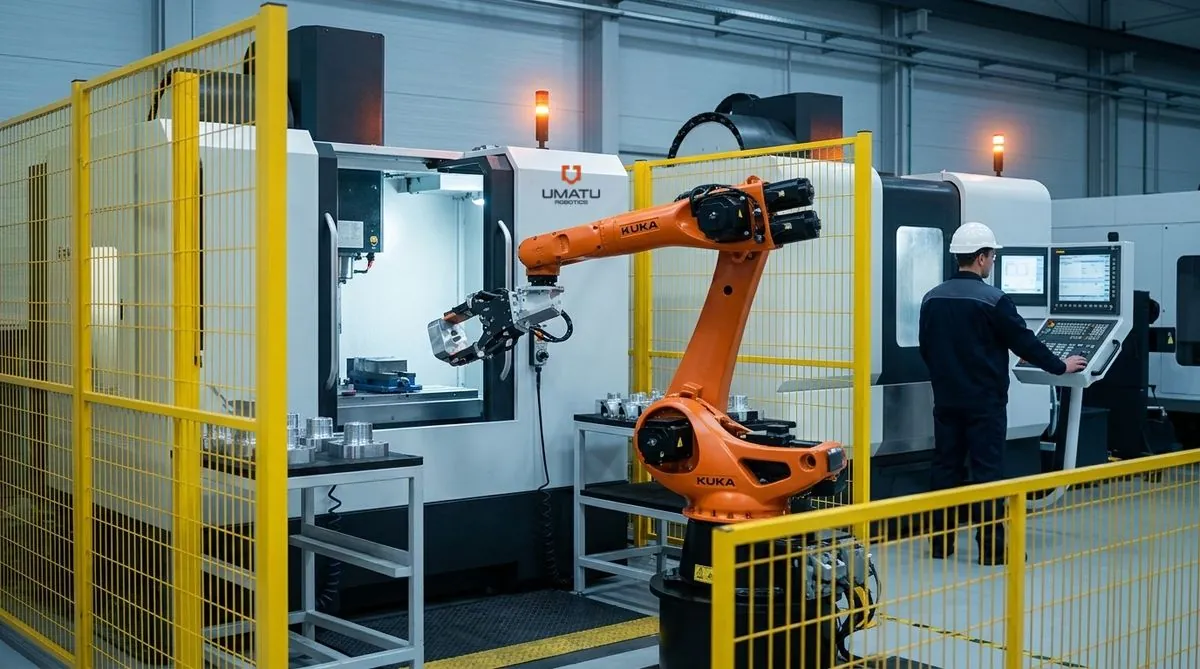
Machine tending
What it is
The robot loads blanks into CNC lathes and milling machines, presses, press brakes and injection molding machines, unloads finished parts and places them in containers. One robot can tend two machines.
Why robotize
A machine sits idle while the operator changes parts, gets distracted or takes a break. The robot keeps equipment loaded, including on night shifts with minimal staff. The operator moves on to setup and quality control.
What's includedKUKA robotSingle or double gripperBlank magazineLink to the machine CNCFencing
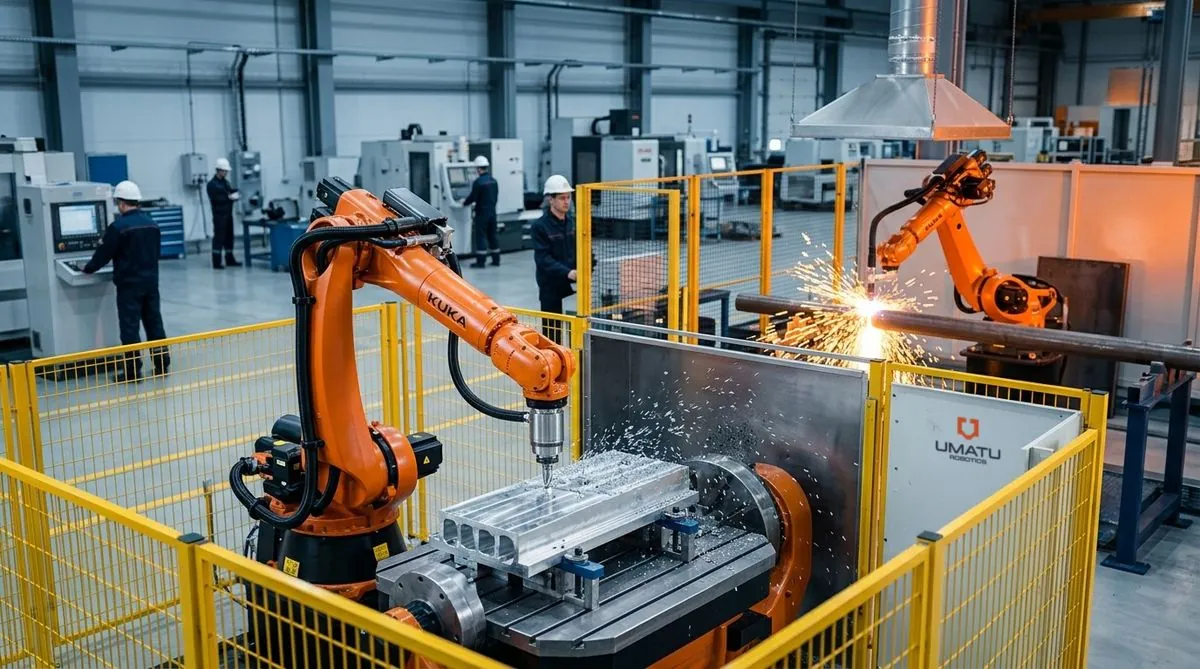
Cutting and machining
What it is
- Cutting: plasma, laser, mechanical — pipes, profiles, edges, sprues
- Milling and drilling of large and complex parts
- Grinding and polishing of surfaces
- Removing flash, burrs and weld spatter
Why robotize
Sparks, smoke, dust and vibration make this work hazardous. The robot guides the tool along the same path without deviation, delivers a repeatable surface finish and reduces material waste. It machines large parts where an expensive large-format CNC machine would otherwise be required.
What's includedKUKA robotPlasma or laser cutterSpindleForce sensorCAM programmingFume extraction
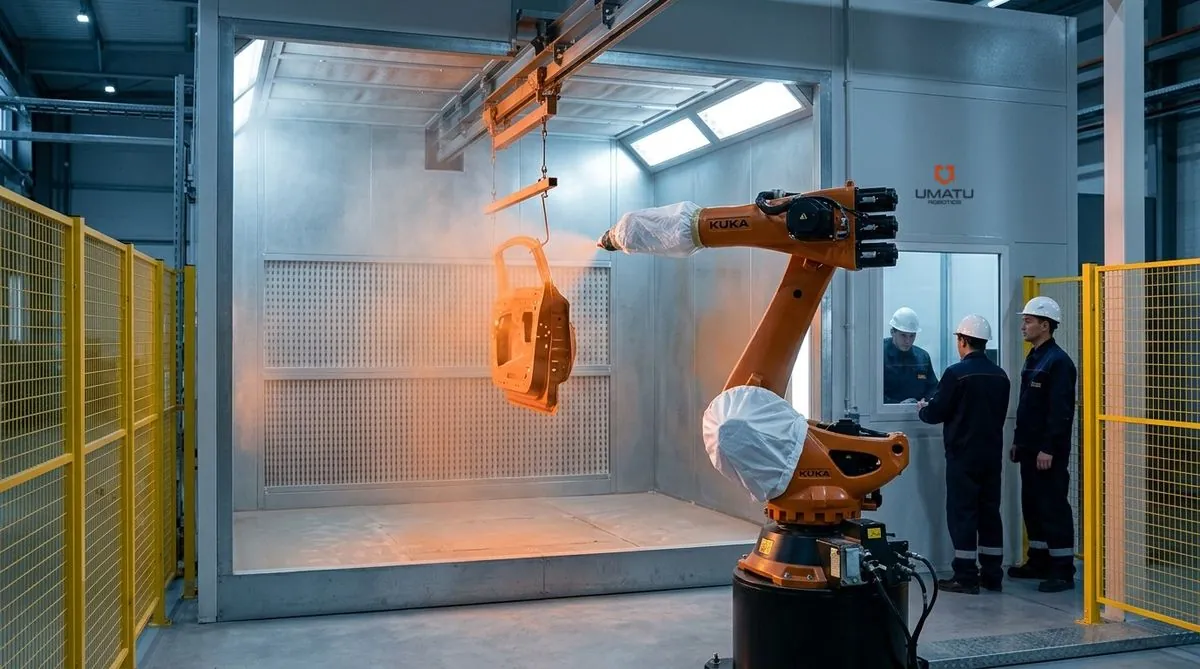
Painting and coating
What it is
Applying paint, primer, varnish and powder coatings to steel structures, housings, machine parts and furniture. The robot repeats the spray path on every part.
Why robotize
A paint booth is harmful to health, and manual painting causes runs, uneven coating thickness and excess material use. The robot applies an even coat, reduces paint consumption and works where people would need respiratory protection.
What's includedKUKA painting robotExplosion-proof versionProtective coverSpray gunPaint booth
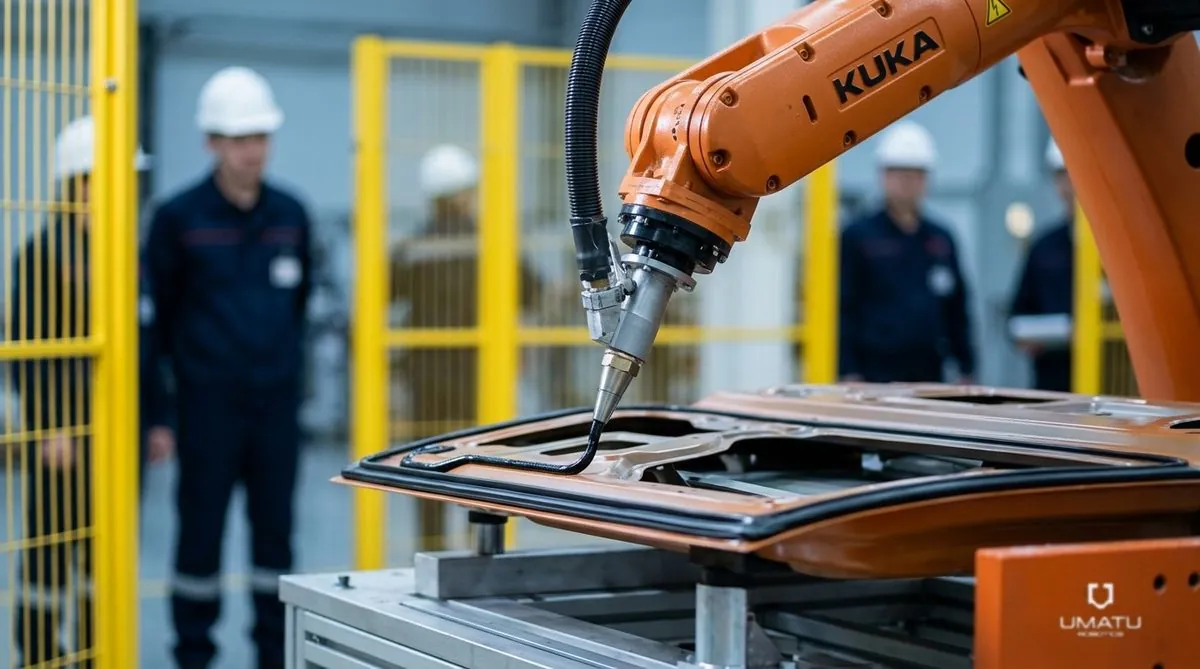
Dispensing and sealing
What it is
Applying adhesive, sealant, gaskets and foam as a bead or dots along the part contour: car body panels and doors, cabinet and device housings, windows and insulated glass units, filters.
Why robotize
A gap or uneven bead means a leaking product and a customer return. The robot keeps the path and material flow consistent on every part, and the bead inspection system shows defects immediately.
What's includedKUKA robotDispensing systemBead inspectionTooling
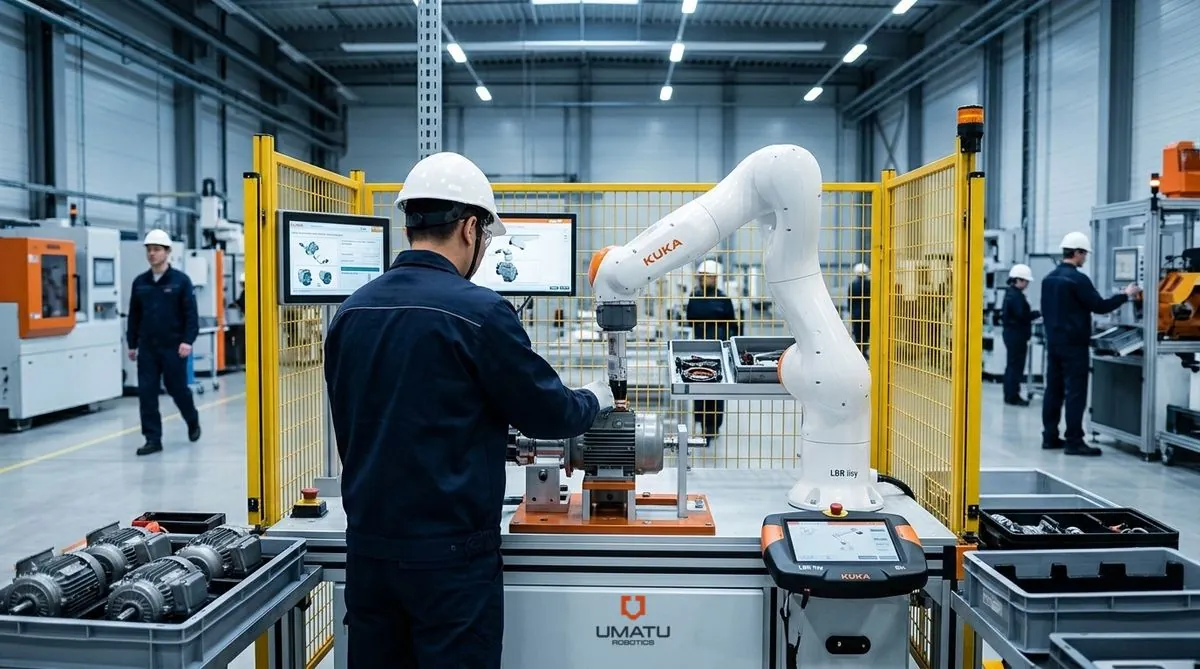
Assembly
What it is
Fitting and press-fitting components, tightening threaded joints with torque control, assembling units: electric motors, gearboxes, electrical cabinets, household appliance components. For work next to people without fencing we use KUKA LBR collaborative robots.
Why robotize
Assembly requires precision and a steady pace, and an error is only discovered at later stages. The robot performs operations without omissions and records the parameters of each: tightening torque, press-fit force, cycle time.
What's includedKUKA robot or LBR cobotToolingTorque-controlled nutrunnerComponent feeding
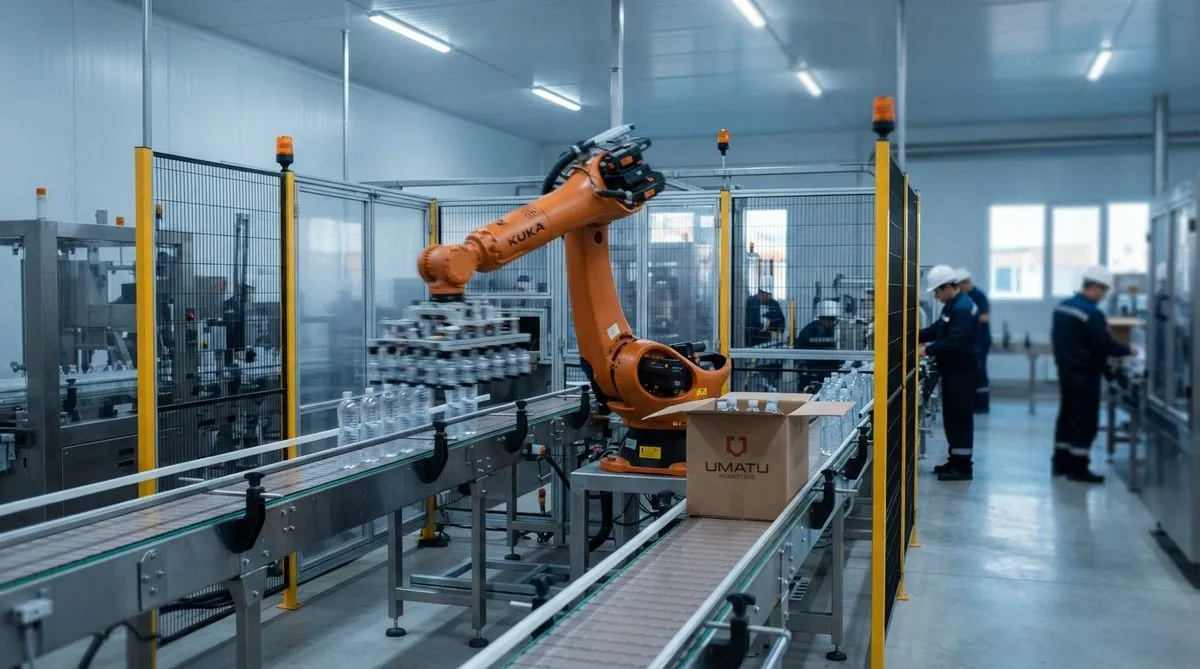
Packing and case packing
What it is
The robot picks products from the conveyor and places them in packaging: bottles and cans into boxes, cookies, candy and baked goods into trays, bags and vials into cartons, parts into container cells.
Why robotize
High pace and monotonous work quickly tire people, and hygiene is critical in food production. The robot keeps line speed without errors or breaks. Packing and palletizing usually follow one another at the end of the same line: first the product goes into a box, then the boxes go onto a pallet.
What's includedKUKA robotVacuum or finger gripperMachine visionConveyors
Industries
Where robotics is used most often
These are the industries where robots are used most often, but the list is not exhaustive: a robot can be integrated into almost any process with repetitive, heavy or hazardous operations. Click a task to open the solution.
02
Metalworking and mechanical engineering
03
Food and beverage industry
04
Pharmaceuticals and cosmetics
05
Construction materials
06
Chemicals and plastics
07
Mining and metallurgy
Work in hot and dusty zonesMoving heavy parts
08
Agricultural machinery
How we work
- 1
Defining the task
We discuss what prevents efficient work and define the goal of robotization
- 2
Diagnostics and audit
We analyze processes and equipment on site
- 3
Design
We design the solution and its integration into your process
- 4
Integration and implementation
Supply, installation and commissioning
- 5
Service and training
Support and staff training